ASSESSING DEVELOPMENT IMPACT THROUGH FSD'S NEW IMPACT RESEARCH PROGRAMME
 |
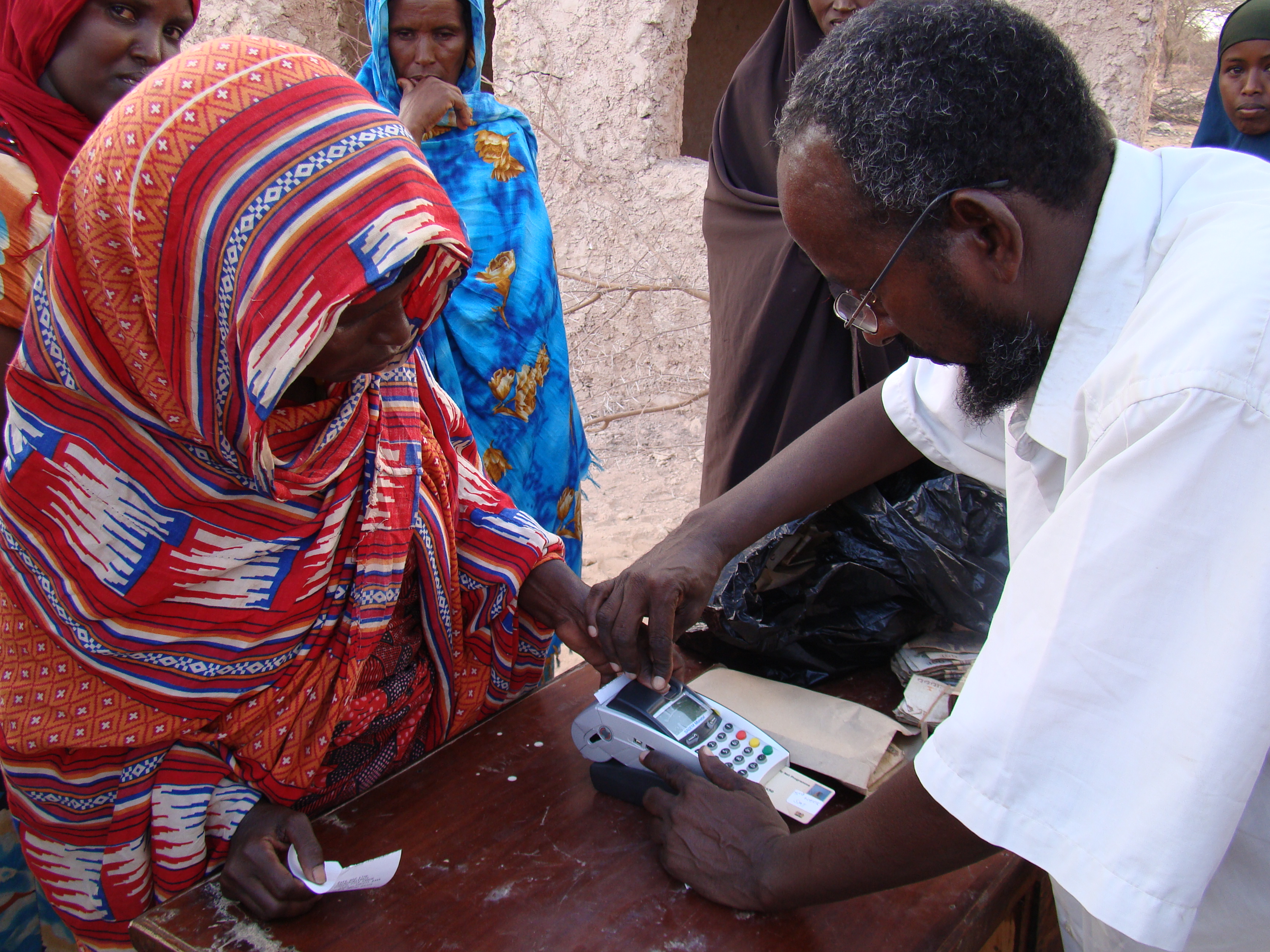
| Members of the Kirinyaga District Farmers SACCO Society Ltd, being served at the Kagumo branch. The SACCO regulations introduced in June 2010 aimed to restore the market’s trust in the sub-sector and boost rural inclusion. According to the 2009 FinAccess survey, access to formal financial services in Kenya increased from 17% in 2006 to 24% in 2009. By 2010, the proportion of adult population that uses services of formal financial institutions had risen to 29%. |
Over the last decade, increasing interest in policy circles to establish the poverty impacts of microfinance has led to a number of high profile studies, and concern by donors to collect evidence of the development impacts of their investments. While few would argue with the need for evidence-based policy-making, the ‘evidence’ is by no means easy to establish.
In January this year, a CGAP/DFID workshop in London brought together a number of development organisations and researchers to address impact assessment in programming for financial inclusion. Representatives from the various FSD organisations operating in the region attended the workshop, arguing strongly for a pragmatic and innovative approach to impact research under a making markets work for the poor (M4P)approach.
The workshop sparked some lively debates on key questions. As development investors, how can we best deliver on accountability to our funders (including tax-paying publics) through proportionate spending on impact research? Does a concern with ‘proof’ of impact override, and sometimes counter, the need to ‘improve’ impact? Under an M4P approach, how do we attribute impact given that our programmes operate strategically to facilitate market development at retail, industry and policy levels, often via network effects and synergies that cannot be examined independently?
Lastly, given that M4P programmes are designed under a theory of change that identifies the market as a prime driver of financial inclusion, do we as implementers and funders need to re-examine the theory, or focus on assessing our direct impacts on markets and financial inclusion?
FSD Kenya addresses some of these issues under our new impact research programme. The programme offers a cost-sensitive, pragmatic design to improve and assess impact. On the one hand, we are tracking project-level impacts on market development. On the other, we are analysing the impact of our programme as a whole on pro-poor financial sector development through longitudinal market case studies in six sites in Kenya, and a price-index which tracks impacts on affordability. The first of our project-level impact synthesis reports will be available in June this year, while the next round of market case-study data will be out by December 2013.
• Related report: FSD Impact Research and Value for Money Assessment: A suggested approach |
|